
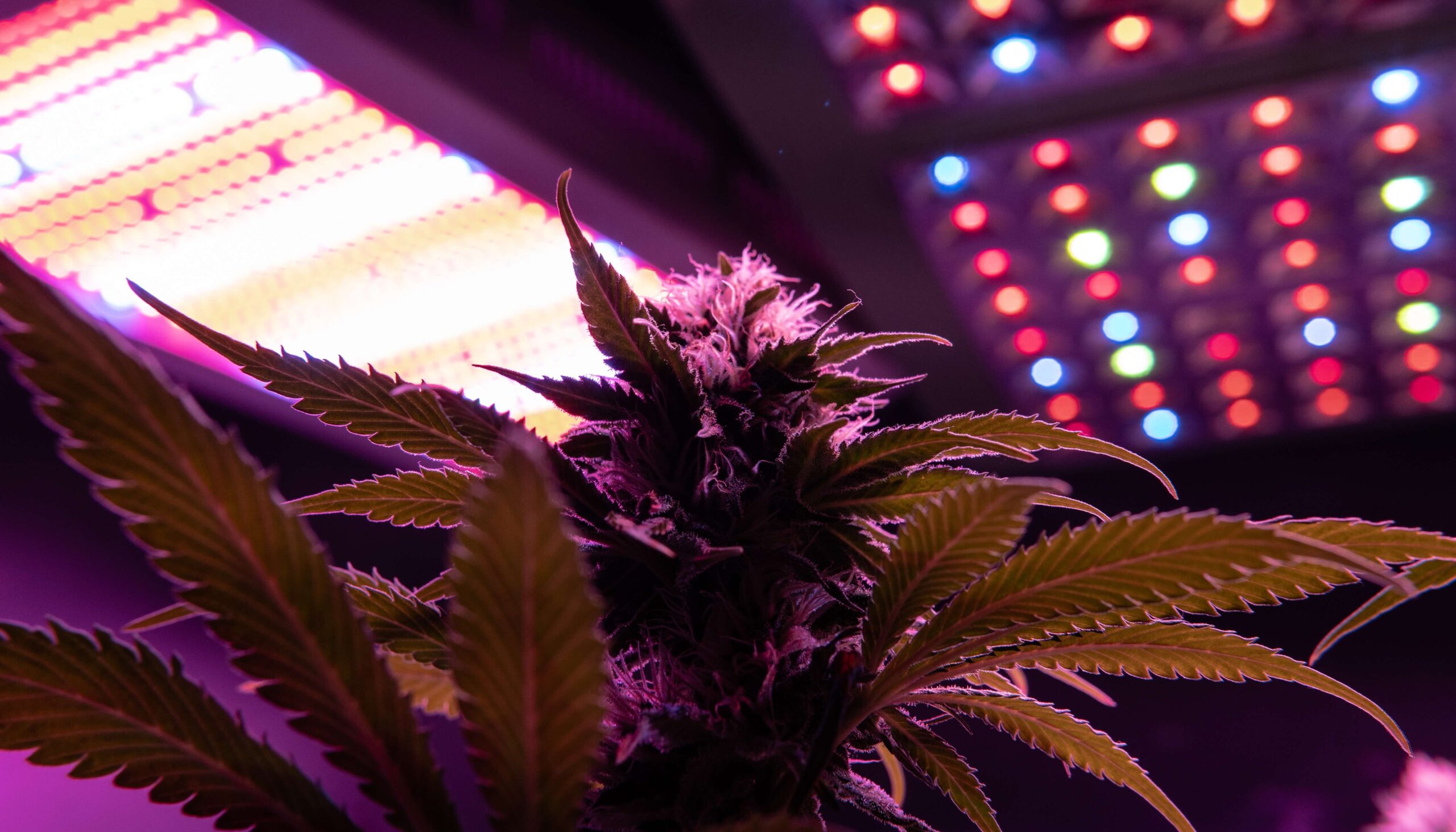
Full Spectrum vs. Broad Spectrum: How to Pick the Winning LED Grow Light for Your Plants?
In the world of indoor gardening, choosing the right lighting for your plants is crucial. With numerous options available, the terms “Full Spectrum” and “Broad Spectrum” are frequently mentioned. They sound highly technical, and manufacturers often claim their grow lights deliver the best harvests, yet their prices and effectiveness can vary dramatically.
So, what do these terms actually mean? And how do they impact plant growth? Whether you are a commercial grower or a home gardening enthusiast, understanding the difference between them is essential for anyone focused on plant health, maximizing yield, and reducing energy consumption. This article will clear the confusion, answer your questions, and provide clear guidance to help you select the true “winning light” that leads to high yields, tailored to your unique goals and setup.
The Core Difference: It’s All About UV Light
Behind the myriad of marketing terms, the most decisive factor separating Full Spectrum and Broad Spectrum LED grow lights is actually ultraviolet (UV) light, which is invisible to the human eye. Understanding this is key to distinguishing between them.
What is Full Spectrum Lighting?
Full Spectrum LED lighting refers to technology designed to closely mimic the spectral output of natural sunlight, providing the full range of light wavelengths plants need for growth. Unlike traditional grow lights (e.g., HID or HPS), which often focus on specific colors (such as red or blue), Full Spectrum LED grow lights deliver a balanced mix of all wavelengths, from ultraviolet (UV) to infrared (IR), aiming to simulate natural sunlight as closely as possible.
-
Spectral Characteristics of Full Spectrum Lighting: Typically covers the entire visible light range (approx. 400nm to 700nm, including green, blue, yellow, orange, and red) as well as the important UV and IR portions. While the specific spectral ratios may differ between brands and models, most Full Spectrum grow lights share a common trait: they emphasize peaks in the blue and red regions.
-
Distinction & Value: Research indicates that appropriate levels of UV light can stimulate plant defense mechanisms and promote the production of beneficial compounds. For instance, for crops of particular interest to commercial growers, such as cannabis, specific UV bands have been linked to increased levels of target active ingredients. Simultaneously, it can enhance color vibrancy and depth—making lettuce greener or purple cabbage more profound—and may boost plant resistance to certain diseases. In essence, Full Spectrum offers an “immersive” sunlight experience, intended to guide plants through their complete, natural growth cycle.
What is Broad Spectrum Lighting?
Broad Spectrum LED lighting is similar to Full Spectrum in that it provides a range of wavelengths beneficial for plant growth and development. However, the wavelength distribution of a Broad Spectrum LED grow light is more uniform across the entire visible spectrum and does not particularly emphasize peaks in the blue or red regions.
Therefore, Broad Spectrum LED grow lights are an excellent choice for growers seeking balanced lighting to promote overall plant health and growth, without a specific focus on particular growth stages or plant characteristics.
-
Spectral Characteristics of Broad Spectrum Lighting: Its core design focuses energy on the blue and red wavelengths, where photosynthetic efficiency is highest. Typically, it intentionally omits or significantly reduces the UV component.
-
Distinction & Value: This design offers two major advantages:
-
High Energy Efficiency: By converting more electrical energy into light that plants can use directly and efficiently, rather than dispersing it across all wavelengths, it often consumes less power while delivering the same effective light intensity.
-
Excellent Safety & Controllability: The absence of UV output means growers working long hours under the lights don’t need special skin or eye protection, making it friendlier for home growing environments with children or pets. It targets core needs, supporting key physiological processes from seedling to flowering in a simpler, more direct manner, especially suitable for crops with no special UV requirements.
-
Pros and Cons of Full Spectrum & Broad Spectrum
Understanding the core difference is just the start. Now, let’s take a more objective look at the practical implications of each.
Pros and Cons of Full Spectrum Grow Lights
-
Full Spectrum Advantages: Choosing Full Spectrum is often about pursuing maximum comprehensive quality and yield. Its benefits are multi-dimensional:
-
More Complete Growth Support: By simulating the sunlight plants crave in nature, plants typically exhibit more balanced, healthier morphology—from robust root systems and lush foliage to full flowers and fruits—receiving relatively natural support at all stages. Some studies note that in controlled experiments, crops under quality Full Spectrum LEDs can yield harvest weights 20% or more higher than those under simple red-blue spectrums.
-
Potential for Quality Enhancement: This is its standout value compared to Broad Spectrum. The presence of UV bands can influence not only color but also the synthesis of flavor compounds, antioxidants, and other secondary metabolites. For commercial growers cultivating high-value herbs, medicinal plants, or ornamental flowers, this nuanced ability to influence quality is key to gaining a market edge.
-
System Simplification: For growers with multiple crop types or plants at different growth stages, a quality Full Spectrum grow light can provide illumination for the entire growth cycle, avoiding the hassle and extra cost of switching or supplementing with different spectrum lights at various stages, thereby simplifying grow management.
-
-
Full Spectrum Disadvantages:
-
Requires More Expertise: While offering comprehensive support and high quality/yield potential, Full Spectrum LEDs place higher demands on the grower’s skill and experience. Covering a broader wavelength range without standardized ratios means growers need in-depth knowledge of their specific plant varieties and their spectral needs at each growth stage for precise light recipe management. Thus, they are better suited for professional growers or those with specialized needs.
-
Higher Relative Investment Cost: If your growing environment and plant varieties have specific requirements, off-the-shelf Full Spectrum LEDs might not meet them 100%. You may need a custom spectrum from a manufacturer, leading to a potentially higher initial investment. However, it’s worth noting that a tailored light spectrum is often key to achieving high quality and yield for your crops.
-
Pros and Cons of Broad Spectrum Grow Lights
-
Broad Spectrum Advantages: Broad Spectrum is not a “watered-down” version of Full Spectrum; it is an irreplaceably smart choice in specific scenarios:
-
Controllable Costs: Broad Spectrum LED grow lights usually have a clear advantage in initial investment. They allow home growers on a budget or commercial growers starting pilot production with minimal capital to obtain highly efficient grow lighting at the lowest cost.
-
Ideal for Specific Crops: For crops primarily harvested for their leaves (e.g., lettuce, spinach, kale) or those in vigorous vegetative growth stages, the concentrated blue and red light provided by Broad Spectrum is often sufficient and even more efficient. It promotes compact, sturdy growth—perfect for “leafy green factories.”
-
Low-Technical-Barrier Choice: Similar to Full Spectrum, Broad Spectrum LEDs provide a range of wavelengths beneficial for plant development. Their overall spectral balance is more uniform and easier to manage, offering a more straightforward growing experience.
-
-
Broad Spectrum Disadvantages:
Potential Limits on Quality & Yield: While providing a cost-effective range of wavelengths for growth, the design limitations of the spectrum may result in average plant quality and yield, potentially capping their upper limits. For commercial growers, this could mean losing competitiveness against rivals.
Your Blueprint: Finding Your Winning LED Grow Light
Now, it’s time to turn theory into your action plan. Don’t get stuck on which is “best.” Follow these three steps to select the LED grow light that’s perfect for you.
Step 1: Audit Your Goals
Every choice starts with what you want to achieve. Before choosing Full or Broad Spectrum, consider:
-
What is your primary goal? Maximizing yield? Pursuing top quality? Seeking the best value for money? Your priority differs drastically:
-
If you aim for maximum market yield and supreme quality, and you have some technical experience and scale, Full Spectrum LED grow lights are the optimal solution.
-
If you prioritize value and want the most cost-effective product for seedling and vegetative growth, Broad Spectrum LED grow lights are an excellent choice.
-
-
What plants are you growing? Consider the characteristics and growth needs of different plants. Refer to the table below for common examples:
| Category | Example Crops | Plant Characteristics & Growth Stage Needs | Recommended Spectrum & Reason |
|---|---|---|---|
| Fruiting/Flowering Plants | Tomatoes, Peppers, Strawberries, Cucumbers | Light-loving. Growth stages cover full cycle: seedling, vegetative, flowering/fruiting. High light intensity required for fruit set and swelling. | Recommended: Full Spectrum. Reason: Perfectly simulates the natural environment, supporting the entire lifecycle. Balanced light promotes strong plant structure. Sufficient red and far-red light is crucial for flowering, fruit set, and accumulation of flavor compounds (sugars, vitamins). |
| Leafy Greens | Lettuce, Spinach, Kale | Entire cycle is primarily vegetative growth. Requires balanced blue/red light for sturdy growth and leaf development/nutrient accumulation. | Recommended: Broad Spectrum. Reason: Clear goal (leaves, not flowers). High-efficiency promotion of leaf growth reduces costs. |
| Ornamental Plants | Flowering (Roses, Orchids); Foliage (Monstera, Philodendron) | High ornamental value. Strict requirements for flower form, blooming period, leaf shape, or color. | Strongly Recommended: Full Spectrum. Reason: Promotes healthy, natural morphological development, resulting in vibrant leaf color, clear variegation, and maintains the plant’s best ornamental state. |
| Medical/High-Value Crops | Medical Cannabis; Medicinal Herbs | Extremely high value. Spectrum critically impacts morphology, yield, and synthesis of secondary metabolites/specific medicinal compounds. Needs often vary by stage; many compounds require specific light quality for induction. | Strongly Recommended: Full Spectrum. Reason: Complex secondary metabolism often requires near-natural full spectrum light to fully activate biosynthetic pathways, which is difficult for Broad Spectrum to precisely simulate. |
-
What is your grow scale and environment? Your space and conditions influence your needs for light power and spectral completeness.
-
For commercial vertical farms and large greenhouses with higher performance demands for power and spectrum, the Full Spectrum LED solution is recommended for more precise and efficient maximization of crop quality and yield.
-
For small-scale indoor rooms, home grow tents, or hydroponic cabinets without strict technical or yield targets, where ensuring plant growth efficacy at a low, convenient cost is key, the Broad Spectrum LED solution is an excellent choice.
-
Step 2: Calculate Your Cost
View lighting as an investment, not just an expense. We need to calculate two types of costs: initial and long-term.
-
Upfront Investment: Broad Spectrum fixtures typically have a lower purchase cost, ideal for quick starts or tightly controlled budgets.
-
Long-Term Return: Full Spectrum lights, while possibly more expensive upfront, may pay for themselves through higher yields, superior quality, and potentially higher selling prices. Consider: Is the extra cost worth it for a light that can bring crops to market earlier or increase unit price by 10%? For commercial operations, calculating Return on Investment (ROI) is key.
Comparison: Full Spectrum LED vs. Broad Spectrum LED Cost-Benefit
| Aspect | Full Spectrum LED | Broad Spectrum LED |
|---|---|---|
| Energy Consumption | Higher (approx. 15-20% more power draw) | More Efficient (approx. 10-15% more energy-saving) |
| Initial Cost | Higher upfront cost | More affordable initial investment |
| Long-Term Cost Savings | Higher revenue and faster growth rates can offset initial cost. | Lower energy costs, but may require additional lighting/equipment to complete a full growth cycle. |
| Lifespan | ~50,000 hours | ~50,000 hours |
| Maintenance | Potentially lower maintenance cost (fewer replacements) | Maintenance costs may be relevant (possible upkeep for supplemental lighting/equipment) |
Step 3: Implement Your Plan
You’ve clarified your goals and weighed the costs. Now, it’s time to put your choice into practice and let the light truly serve your plants’ growth. Successful implementation is more than hanging a light and flipping a switch; it’s a systematic process ensuring maximum return on your investment.
-
Precise Installation & Layout: Plan the fixture’s placement, height, and density scientifically based on your scale and environment.
-
Height & Coverage: Follow the manufacturer’s recommended hanging height to ensure even light distribution, avoiding hot spots in the center and weak light at the edges. For plants with uneven canopies, consider adjustable hangers.
-
Light Intensity Layering: In commercial greenhouses or vertical farms, cleverly use Full Spectrum lights to complement natural sunlight for optimal energy efficiency and results.
-
Home & Small Spaces: In tents or cabinets, ensure the light size matches the space and provide adequate ventilation to prevent heat buildup, which affects both light lifespan and plant health.
-
-
Develop & Optimize a Light Schedule (Photoperiod): Precise light timing management is crucial.
-
Match Growth Stages: Set specific light durations (photoperiods) for different stages (seedling, vegetative, flowering) of your specific plants. Many Full Spectrum lights support programming to automate sunrise/sunset simulation or even dynamic spectrum adjustment.
-
Observe & Adjust: Monitor plant response closely initially. If you see stretching (insufficient light), leaf burn (too intense light or too close), or irregular flowering, adjust the light duration or fixture height promptly. Remember, even the best spectrum needs correct usage to be effective.
-
-
Establish a Monitoring & Record-Keeping System: Data-tracking your grow is key to progressing from novice to pro.
-
Record Key Data: Log light-on times, power settings, plant performance at different stages (growth rate, leaf color, flowering time), and final yield/quality.
-
Calculate ROI: For commercial growers, regular evaluation is vital. Compare inputs (electricity, equipment) with outputs (yield increase, quality improvement premium) to verify if your choice between Full and Broad Spectrum meets expectations.
-
-
Plan for Long-Term Maintenance & Upgrades: LED lights are long-lasting but not “set and forget.”
-
Regular Cleaning: Dust significantly reduces light output efficiency. Clean heatsinks or lenses quarterly.
-
Performance Monitoring: Watch for light depreciation. After several years, consider using a light meter to check actual output, ensuring plants always receive sufficient light.
-
Technology Updates: LED tech evolves rapidly. Years later, when expanding or replacing equipment, return to Step 1. Re-evaluate your latest goals and market demands—you’ll be equipped to make an even smarter upgrade decision.
-
Pro Tips: From Picking Lights to Boosting Your Harvest
Mastering some advanced knowledge will not only help you choose lights but also use them effectively, maximizing your investment value.
How to Read an LED Grow Light Spectrum Chart Like a Pro?
Don’t be intimidated by complex charts. Focus on two key elements: Peaks and Ratios.
- Identify the Peaks: Look where the “mountains” on the chart are concentrated. If there are prominent peaks in the blue region (~450nm) and deep red region (~660nm), it emphasizes core photosynthetic bands. If the curve is relatively smooth and full from blue to red, it’s closer to a sunlight-like Full Spectrum profile.
- Assess Red/Blue Ratio: Get a feel for the relative height of the red and blue “peaks.” Blue-dominant lights are better for promoting vegetative growth; red-dominant lights favor flowering and fruiting. A clear spectrum chart speaks more honestly about a light’s capabilities than any flashy advertising.
Dynamic Adjustment: Why Changing Light is Your Secret Weapon
Top-tier growers never set their lights to a fixed mode. They adjust the spectrum and intensity subtly for different crop stages, like a chef seasoning a dish.
- Seedling Stage: More blue light keeps seedlings stocky and prevents stretching. Light intensity can be softer.
- Vegetative Stage: Provide balanced blue and red light to encourage the development of lush, healthy leaves and stems.
- Flowering/Fruiting Stage: Increase the ratio of red and far-red light. This is a key signal that triggers flowering and promotes fruit development.
Many high-end commercial LED systems now support preset or manual spectrum programming. Even if your light isn’t tunable, understanding this helps you make more informed choices when configuring lights for different plant zones or growth stages.
Final Thoughts: So, Which One Wins?
The final answer isn’t a simple either/or. There is no absolute winner between Full Spectrum and Broad Spectrum. True victory lies in choosing the most appropriate light for your specific growing goals.
Full Spectrum lights mimic natural sunlight, providing a complete range including UV, aiming to unlock a plant’s full potential—especially significant for high-quality, high-value crops. Broad Spectrum lights focus on the most photosynthetically efficient red and blue light, offering precise support for foundational plant growth with higher energy efficiency and lower cost.
Therefore, your choice is already embedded in your initial goals: For pursuing ultimate quality and comprehensive output, choose Full Spectrum. For prioritizing cost and basic growth efficiency, Broad Spectrum is the wise choice. Whichever you select, only when combined with scientific layout and management will its true value be realized.
CATEGORIES
Recommended Post

Where It’s Legal to Grow Cannabis: Ultimate Tips & Cultivation Laws
About Author—Jose Li
Jose, a senior content creator at BATA LED, brings over 5 years of expertise in LED grow light. He delivers valuable insights to help growers and farmers better understand LED grow light technology, empowering them to boost crop yields and quality with advanced lighting solutions.